Symbol Atlas · 03Motion study
Flame
A visual language of taper, overlap and light rather than one fixed historical sign.
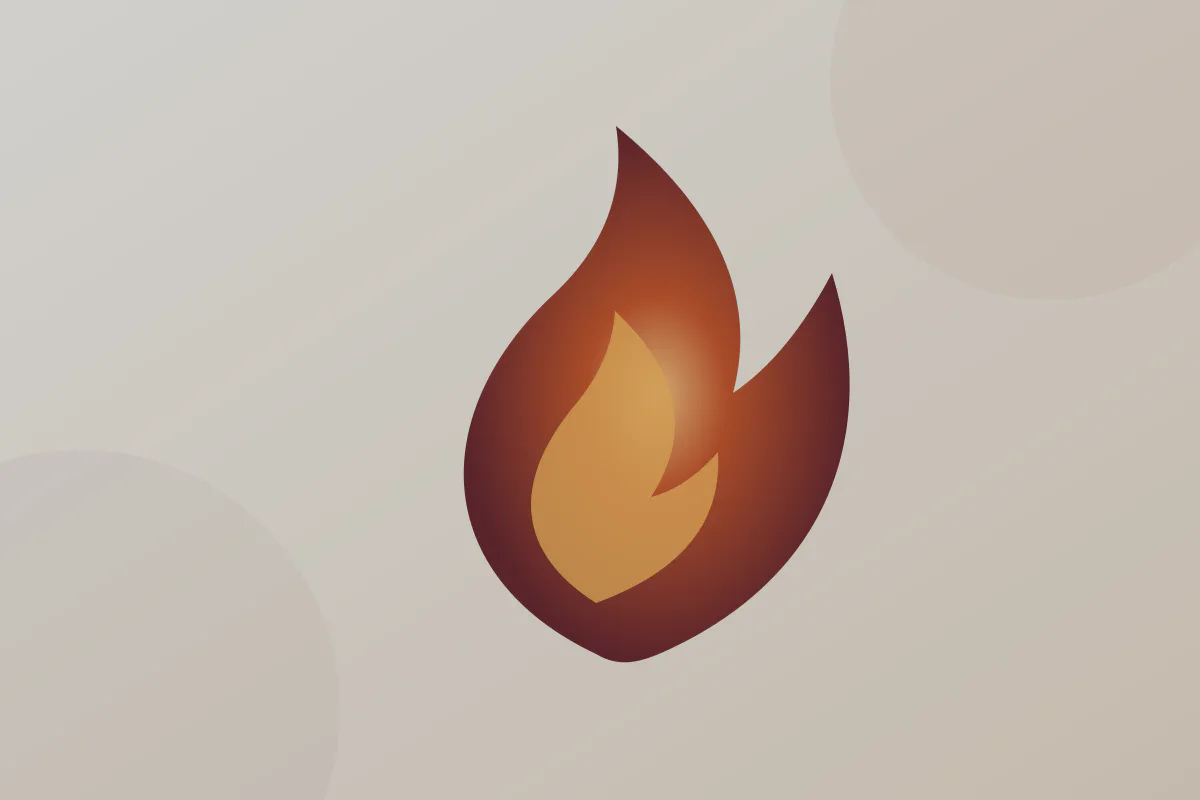
Flame can be represented through pointed contours, gradients, reflected light or repeated curls. Those devices belong to the artist’s medium and period. A flame surrounding a bird does not automatically prove the same narrative in every cultural context.
Historical claims below are tied to a named record. Visual guidance is our contemporary editorial analysis.
Record-based notes
What is documented
The Getty’s medieval bestiary material offers a documented manuscript context for a bird shown with flames.
Earlier Greek reporting in Herodotus does not describe the familiar self-burning scene; that distinction matters.
Catalogued objects should be read from their own records before broad symbolic claims are made.
Studio reading
Contemporary visual choices
- A pale center beside saturated orange suggests emitted light.
- Curved flame tips can echo feather direction and unify the figure.
- Small-screen art benefits from one dominant flame rhythm rather than dense particle effects.
Applied analysis
Three ways to read the motif
Taper
Narrow ends imply upward acceleration.
Overlap
Layered contours distinguish a flame mass from a flat icon.
Reflection
Warm edge light lets the fire affect nearby stone or metal.
Reference shelf
Sources & further reading
- Herodotus, The Histories, Book 2.73 — Perseus Digital Library
An early Greek literary account; the writer explicitly reports what he was told and says he had not seen the bird.
- A Phoenix, about 1270 — J. Paul Getty Museum
A Franco-Flemish bestiary folio in tempera, gold leaf and ink.
- A Birdwatcher’s Eye View — Getty
A museum overview that includes the medieval bestiary treatment of the phoenix.